




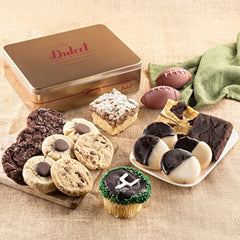




Corporate gifting looks simple until you do it at any real scale. You pick something nice, you send it, everybody's happy. Then a client's compliance officer emails asking what it cost. Then your accountant asks why the gifts line ran to $8,000. Then payroll mentions that the gift cards you sent employees are taxable wages.
This guide covers the parts of corporate gifting that actually cause trouble: how much to spend, whose rules apply, which corporate gift ideas hold up, and how the tax treatment works for clients and employees. We ship business gifts year round from our own bakery kitchen, so most of what follows comes from watching which orders go smoothly and which ones come back with questions. Nothing here is tax advice, and you should run the numbers past your accountant before you file.
What counts as a corporate gift
A corporate gift is anything of value your company sends to clients, employees, vendors, or prospects without expecting payment in return. Gift baskets, wine, chocolates, apparel carrying a company logo, event tickets, a charitable donation made in someone's name. The category is broad, and that breadth is exactly why so many organizations keep a written policy covering gifts in both directions.
Two distinctions matter more than the rest. Client gifts and employee gifts are treated differently by the IRS. And cash-like items (gift cards, prepaid debit, points that convert to money) are treated differently from physical goods. Get those two right and most of the confusion around corporate gifting disappears.
It also helps to be honest about the goal. Corporate gifting is not a thank-you note with a budget attached. It's a signal about how much a relationship is worth to you, sent in a form the recipient can hold. That's why perceived value, packaging, and timing end up mattering as much as the dollar figure on the invoice.
Corporate gift ideas that actually land
The best corporate gift ideas share three traits: they get opened quickly, they're easy to share, and they don't ask the recipient to have a specific taste. Food clears all three, which is why food gifts still dominate corporate gifting years after everyone predicted they'd be replaced by experiences and apps.
Gift ideas that reliably work:
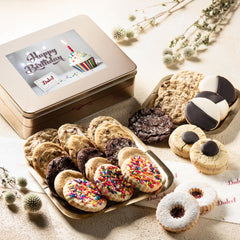
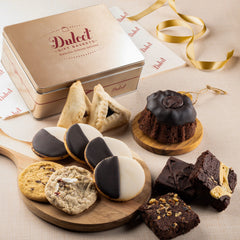
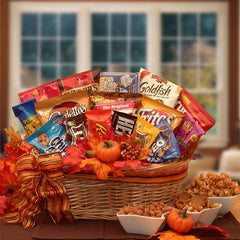
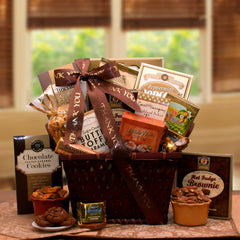
- Bakery boxes and gift baskets. A box of cookies, brownies, and pastries gets shared around the office within an hour. High perceived value, no dietary assumptions beyond the obvious allergens, and it creates a moment rather than an object.
- Team-sized gifts. One larger basket for a whole team often beats fifteen small ones. It's cheaper, it's less packaging, and it makes people gather.
- Milestone gifts. Work anniversaries, closed deals, a promotion, a return from leave. Gifts tied to a specific occasion are remembered; gifts tied to a date on the calendar are not.
- Quality over novelty. One genuinely good thing beats a bag of branded trinkets every time. Fun gifts land only when you know the person.
- Client appreciation gifts sent off-season. A thoughtful gift in March costs the same as one in December and gets ten times the attention.
What doesn't land: anything that requires the recipient to do work. Redemption codes, sign-up flows, and pick-your-own-gift portals add friction to a gesture that's supposed to be effortless. If the recipient receives a link instead of a box, half of them never claim it.
How much to spend: a corporate gifting budget by tier
There is no single correct number. What holds up across most teams is a tiered budget, where the spend matches the size of the relationship instead of the calendar. Here is the structure we see most often, mapped to real products in our corporate gift basket collection so the budget numbers are concrete rather than theoretical.
Prices as of August 2026.
| Budget tier | Typical use | Example from our store | Price |
|---|---|---|---|
| Under $50 | Peer shoutouts, new hires, high-volume holiday gifts | Fresh Baked Assorted Cookie Gift Box | $39.95 |
| $50 to $75 | Work anniversaries, standard client thank-yous | Best Sellers Gourmet Pastry Gift Box | $62.99 |
| $75 to $100 | Key clients, team-sized boxes meant to be shared | Best Sellers Cookie and Brownie Party Box | $76.95 |
| $100 and up | Strategic accounts, executive recognition, whole-office gifts | Grandiose Classic Bakery Gift Box | $124.99 |
Three practical notes on budget. Underspending on your most important relationships is worse than sending nothing, because a thin gift to a key account reads as an accurate measure of how you rank them. The spend that gets remembered is rarely the biggest one; a $63 box that shows up the morning after a launch beats a $200 tower that arrives in late December with a thousand others. And a budget tier only works if you actually stick to it, which means writing it down before the season starts rather than deciding gift by gift.
For reference, most small and mid-sized companies we work with land somewhere between $50 and $125 per recipient for clients, and $25 to $75 per person for employees, with a smaller number of luxury gifts reserved for a handful of strategic relationships. Annual corporate gifting spend for a 40-person company running both programs typically falls in the $6,000 to $15,000 range.
If the budget is genuinely tight this quarter, our gift baskets under $50 hold up better than most people expect, and there's more on stretching a small program in our guide to employee appreciation on a budget. Affordable does not have to mean forgettable, as long as the quality of what's inside is real.
The rules on the receiving end
Before you send anything, find out what the recipient is allowed to accept. Many organizations cap the value of gifts an employee may keep, and $25 to $100 is the common range. Government employees, public school staff, healthcare procurement teams, and most publicly traded financial firms operate under stricter limits than that, and in some cases the answer is a flat no.
The awkward outcome is not that your gift gets rejected. It's that the recipient has to log it, disclose it, or send it back, which turns a moment of appreciation into paperwork. When you don't know the policy, two things reliably work: keep the value modest, and send something perishable and shareable. A box of baked goods that circulates around the office sidesteps the personal-benefit question almost entirely, which is one reason food gifts stay popular with clients in regulated industries.
Timing matters just as much. Never send gifts while a contract is under negotiation, during a renewal window, or in the weeks around a performance review. The gift itself may be fine. The optics are not, and a client who has to explain the timing to their manager will remember the awkwardness rather than the gesture.
Corporate gifting and taxes
Client gifts and the $25 rule
The IRS limits the deduction for business gifts to $25 per recipient per year. That figure was set in 1962 and has never been adjusted for inflation, which is why it feels so far off from what a decent gift costs today. You can still send a $125 basket to key clients. You just can't deduct more than $25 of it per person.
Incidental costs such as engraving, gift wrapping, packaging, and shipping generally sit outside the $25 cap as long as they don't add substantial value to the gift itself. Items under $4 that carry your company logo permanently and are distributed widely, along with promotional signs and displays, are usually handled as advertising rather than gifts. A gift addressed to a company as a whole, meant for general use by the staff, is treated differently from a gift addressed to one named person, so how you label the shipment genuinely changes the math.
Keep records. Date, recipient, business relationship, cost, and business purpose. It takes a minute per gift and it's the difference between a clean deduction and an argument.
Employee gifts: wages or de minimis
Employee gifts follow a different set of rules. Cash and gift cards are taxable compensation, full stop, no matter how small the amount. A $25 gift card is $25 of wages, subject to withholding and reporting. There is no de minimis exception for anything that functions like money.
Non-cash gifts of small value given occasionally can qualify as a de minimis fringe benefit, which is not taxable to the employee. A holiday food basket is the textbook example the IRS itself uses. The value has to be small enough and the occurrence infrequent enough that accounting for it would be unreasonable, and the IRS has never published a hard dollar threshold. Practical read: a food gift at the holidays is straightforward, a monthly $75 basket to the same person is not.
This is the single most common thing companies get wrong. They send gift cards because it feels flexible and easy, and then quietly create a payroll problem for every one of their employees. A physical gift avoids that entirely, which is a boring reason to choose a gift basket and also a genuinely good one.
Client appreciation and employee appreciation are different jobs
Once the tax picture is clear, the strategy gets simpler. Employee gifts are about recognition, so they work best tied to a specific moment: a work anniversary, a shipped project, a return from parental leave, a rough quarter that everyone pulled through. Employees notice what gets celebrated, and a gift that arrives two weeks after the win lands better than a generic seasonal box. Our roundup of employee appreciation ideas has plenty of options that cost nothing and pair well with a small gift.
Client gifts are about being remembered. That argues for sending fewer, better gifts to the clients that matter, and for sending them off-cycle. December is crowded. February is empty. A client appreciation basket in a quiet month reads as a real gesture rather than a seasonal obligation, and our thank you gift baskets are built for exactly that.
Where employees and clients overlap is the personal touch. A handwritten note costs nothing and is the only part of the gift anyone quotes back to you later. A printed card carrying the company logo is fine. A real sentence in real handwriting is better, and it's the cheapest upgrade available to any corporate gifting program.
If you'd rather start from products than principles, the best corporate gift baskets for 2026 walks through picks by scenario.
Holiday gifts and the timing nobody plans for
Holiday gifts are where most corporate gifting budgets get spent and where most of the value gets lost. Everything arrives in the same three weeks, half the recipients are already on leave, and the gift that took you an afternoon to choose gets stacked on a table with eleven others.
A few fixes. Ship the week after Thanksgiving rather than the week before Christmas, when offices are still full and carriers are still moving on schedule. Send to home addresses for remote employees, because an office delivery in late December often sits until January. And consider skipping the holidays entirely for your top clients, moving that spend to a quieter moment where a single basket gets the attention it deserves.
Whatever you decide, plan ahead. Order at least three weeks in advance for the holidays. Between Thanksgiving and Christmas, carrier capacity tightens and the good options sell through, so booking early is how you get your first choice at a normal price.
Bulk orders, packaging and custom touches
Volume turns gifting from a choice into a small logistics project. A few habits save real time.
Collect addresses early and in one format. Most delays on bulk orders come from missing suite numbers and from office addresses where nobody is in the building on a Friday. Build the list in a spreadsheet, verify it once, reuse it every year.
Keep the packaging consistent. When fifty recipients get visibly different boxes and bags, somebody notices and somebody feels ranked. One basket, one look, one message, repeated. Perceived value comes from the presentation as much as from the contents, which is why we keep the ribbon and box the same across a bulk order even when the sizes vary.
Custom touches are worth it when they're about the recipient rather than about you. A custom message card, a custom ship date so the gift arrives on someone's actual anniversary, a custom mix for a team with a known allergy. Custom branding on the gift itself is a different thing, and usually a worse one.
Stagger ship dates for large sends. Fifty boxes arriving at one office on one afternoon creates a receiving problem, not a moment.
Building corporate gifting programs that scale
The companies that do this well don't decide gift by gift. They build small gifting programs: a short calendar, two or three preset baskets at fixed price points, and one person who owns the process. Managers can then send recognition without opening a new procurement conversation every time, and finance gets a predictable line item instead of a surprise.
A workable annual structure looks like this. Holiday gifts for clients and employees in the first week of December. Client thank-yous after each renewal or major delivery. Employee milestones as they land. One off-season send in spring when nobody else is doing it. New hires get a welcome box in their first week, which is the single highest-return gift on the list because it shapes how someone feels about a company before they've formed any other opinion.
Write the tiers down, name the products, and set the approval threshold. Boring, and it works. It fixes the budget, removes the decision fatigue, and makes the annual spend easy to defend.
What not to send
Here is the opinion, and it costs us money to say it: skip the logo on the gift itself. Branded merchandise is marketing, not appreciation, and most recipients can tell the difference instantly. A mug carrying a company logo says you had budget left over. A box of food that arrives fresh says you were thinking about a specific person. Save the brand for the card and the ribbon.
Also worth avoiding: alcohol when you don't know the recipient's preferences or their state's shipping rules; anything perishable sent to an office in late December when people are already on leave; diet-specific or novelty food that assumes a taste you haven't confirmed; and anything so expensive it obligates the recipient to reciprocate. If a gift makes someone feel they now owe you, it has done the opposite of its job.
And don't forget the people who make the business run but never appear on a client list. Warehouse staff, support teams, the bookkeeper. Corporate gifting programs that only reward the front office are noticed for exactly what they are.
A short corporate gifting checklist
Run through this before any batch of gifts goes out. It takes five minutes and catches most of what goes wrong.
- Check the policy. Ask what your recipients are allowed to accept. A quick email beats an awkward return.
- Match the tier to the relationship. Key clients and long-tenured employees should not receive the same gift as a first-week prospect.
- Keep employee gifts non-cash. Gift cards create payroll work. Food gifts don't.
- Focus the budget. Fewer, better gifts to the relationships that carry the business beat a thin spread across everyone.
- Confirm shipping windows. Perishable gifts need a delivery date when someone is actually there to receive them.
- Write the note by hand. One specific sentence about what the person or the team did. That's the memorable part.
- Log it. Date, recipient, cost, business purpose. Your accountant will thank you in April.
The smart version of corporate gifting isn't complicated. It's a small number of thoughtful decisions made in advance, applied consistently, so that every gift you send reflects the same level of care. Get that right and the gifts do what you wanted them to do: they make a customer feel valued, they make employees feel seen, and they make your company the one people remember when the next opportunity comes around.
Where to start
Pick your tiers, confirm the recipient's policy, keep employee gifts non-cash, write the calendar down, and get the holiday order in before Thanksgiving. Everything else is detail. When you're ready to shop, our corporate gifts collection is organized so you can build a program in one sitting, and the full gift basket delivery range is there when a request falls outside the usual tiers.
Once the budget and the rules are settled, the harder question is what to actually send. Our guide to client appreciation gifts covers price bands by relationship, when to send, and the categories clients quietly throw away.


