



What You'll Find in This Guide
Every state has its symbols, but few have an origin story quite like West Virginia's. The Mountain State's official fruit, the Golden Delicious apple, didn't come from a carefully planned breeding program or a fancy agricultural experiment. It showed up on a hillside in Clay County, completely uninvited, and ended up becoming one of the most popular apples on the planet.
That's a pretty good glow-up for a random seedling nobody asked for.

The Accidental Discovery That Changed Everything
Here's the thing about the Golden Delicious. Nobody planted it on purpose. Back in the early 1900s, a farmer named Anderson Mullins was working his land near Porter Creek in Clay County, West Virginia, when he noticed a young apple tree growing where it shouldn't have been. The seedling had likely sprouted from a discarded Grimes Golden apple core, though nobody knows that for certain.
What Mullins did know was that the fruit tasted incredible. Sweet, honeyed, with a buttery smoothness that set it apart from anything else growing in those hills. He started calling it "Mullins's Yellow Seedling," which, while not the catchiest name in the world, got the point across.
Word got around. By 1914, the Stark Brothers Nursery out of Missouri caught wind of this remarkable apple and sent representatives to Clay County to investigate. They were so impressed that they purchased the original tree from Mullins and did something that sounds almost comical today: they built a cage around it. An actual iron and wire enclosure to protect what they recognized as a goldmine, literally and figuratively.
Stark Brothers hired Anderson's nephew, Bewel Mullins, to maintain the tree and keep detailed written and photographic records of it for the next 30 years. They renamed the fruit "Golden Delicious" to market it alongside their already-famous Red Delicious variety. And the rest, as they say, is apple history.
How It Became West Virginia's State Fruit
You'd think a state would be quick to claim an apple this famous. But it actually took until February 20, 1995, for the West Virginia Legislature to officially designate the Golden Delicious as the state fruit. That's roughly 80 years after Stark Brothers first commercialized it.
Better late than never, right? The designation was really just making official what West Virginians had known all along. This apple belongs to them. It was born in their soil, shaped by their climate, and it put a tiny corner of Clay County on the global agricultural map in a way nobody could have predicted.

What Makes a Golden Delicious So Special
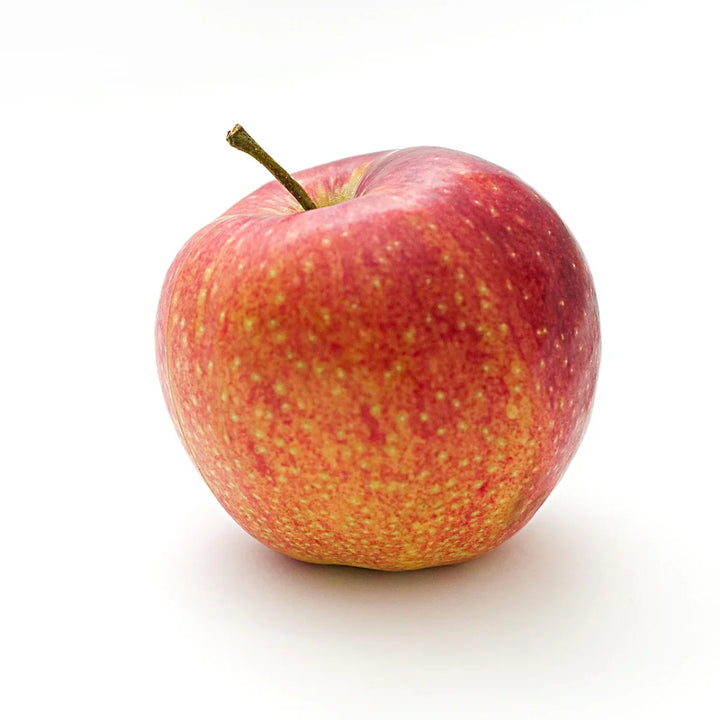
If you've only ever grabbed a Golden Delicious from the grocery store in January, you might be underwhelming yourself. A tree-ripe Golden Delicious, picked at peak season, is a completely different experience. The skin turns from green to a warm, sunny gold. The flesh is crisp and juicy with a sweetness that's almost floral, like honey mixed with vanilla and just a hint of tartness to keep things interesting.
The texture matters too. Golden Delicious apples have a fine-grained flesh that holds together beautifully when you bite into it. None of that mealy, grainy disappointment you sometimes get with apples that have been in cold storage too long.
Nutritionally, they're solid performers. A medium Golden Delicious apple runs about 95 calories and delivers around 4 grams of fiber, plus a healthy dose of vitamin C and potassium. The skin contains quercetin, an antioxidant that researchers have linked to heart health benefits. So yeah, the whole "apple a day" thing holds up pretty well here.
One more thing that makes Golden Delicious special among apple varieties: they're naturally high in pectin. That's the compound that helps jams and jellies set properly, which is why they've been a go-to for making homemade apple butter and preserves for over a century.
Where They Grow in West Virginia
While the original Golden Delicious tree sprouted in Clay County, most commercial apple growing in West Virginia happens in the Eastern Panhandle. The Shenandoah Valley region, particularly around Berkeley, Jefferson, and Morgan counties, provides the ideal combination of elevation, soil drainage, and temperature swings that apple trees love.
Golden Delicious trees need about 700 chill hours (time spent below 45 degrees Fahrenheit) during winter dormancy to produce well. West Virginia's mountain climate delivers that reliably, along with warm summers that help the sugars develop in the fruit. The state's apple harvest typically runs from late August through October, with Golden Delicious usually hitting peak ripeness in mid to late September.
The original Mullins tree survived until the 1950s, when it finally succumbed to old age. But its DNA lives on in millions of Golden Delicious trees around the world. Today, the variety is grown commercially across the United States and is one of the most widely planted apple cultivars in Europe, particularly in France and Italy.
The Clay County Golden Delicious Festival
Every September, the town of Clay (population: tiny, spirit: enormous) throws a four-day party to celebrate its most famous export. The Clay County Golden Delicious Festival has been running since 1973, and it's exactly the kind of small-town Appalachian event that makes you fall in love with West Virginia.
We're talking apple butter making, baking contests, a 5K race, a skillet-flinging contest (yes, that's real, and yes, it's as entertaining as it sounds), clogging performances, live music, craft vendors, and a parade. The festival takes place the third weekend of September every year, timed perfectly with peak apple season.
If you've never been to a small-town festival in the mountains of West Virginia, put this one on your list. The apple-themed baked goods alone are worth the trip.

Cooking and Baking with Golden Delicious Apples
Golden Delicious apples are one of the most versatile cooking apples you'll find. America's Test Kitchen, Food Network, and Serious Eats have all named them among the best apples for baking pies, and there's a good reason for that. Their high pectin content means they hold their shape during cooking instead of turning to mush, and their balanced sweet-tart flavor intensifies beautifully in the oven.
Here's what they're best at:
- Apple pie: They keep their structure and develop a deeper, more caramelized sweetness when baked. Mix them with a tart variety like Granny Smith for the perfect pie filling.
- Applesauce: Golden Delicious break down into a naturally sweet, smooth sauce that needs very little added sugar. This is what your grandmother was making applesauce with, guaranteed.
- Apple butter: That high pectin content makes them ideal for the slow-cooked, spreadable goodness that's practically a food group in Appalachian cooking.
- Fresh eating: Don't overlook the obvious. A crisp Golden Delicious straight off the tree, still warm from the September sun, is one of life's simple pleasures.
- Salads: They oxidize (turn brown) more slowly than many apple varieties, making them a practical choice for salads and cheese boards.
If you love trying regional recipes with quality ingredients, our fruit gift baskets are a great way to explore seasonal flavors from around the country.
Send a Taste of West Virginia
There's something special about gifting fruit that actually has a story behind it. West Virginia's Golden Delicious apple isn't just another supermarket variety. It's a piece of American agricultural heritage that started with one lucky seedling on a hillside in Clay County and spread to orchards on every continent except Antarctica.
Whether you're celebrating a birthday, saying thank you, or just want to brighten someone's day, a beautifully curated gift basket featuring fresh fruit is always a hit. And if you need it fast, our same-day delivery options have you covered.